
Posted by Foy's Pet Supplies on Nov 18th 2026
Pigeon Breeding Season Prep: What You Need Before Pairing Your Birds
Before breeding pairs go together, the loft should already be set up for what comes next. That means clean nest boxes, the right nest bowls, fresh feed and water, grit and minerals, breeding records, and current-year bands ready before the first youngsters hatch.
Getting those basics sorted before pairing day saves you from trying to find a missing nest bowl, record card, or band once the birds are already settled and laying.
The exact setup will vary between racing, fancy, and utility pigeons, but the preparation is much the same. Give each pair a clean breeding space, check the birds’ condition, and have the equipment they will need through laying, incubation, and rearing.
When Should You Start Preparing Pigeons for Breeding Season?
Breeding preparation should begin before the pairs are put together, not after the first eggs appear. The breeding section needs to be clean and ready, and the birds should be in good condition before pairing.
Many experienced breeding programs begin adjusting feed and management in the weeks leading up to pairing. The birds should have finished the molt, be at a healthy weight, and be eating normally before they are moved into their breeding setup.
Avoid making several changes on pairing day. Switching feed, moving birds into new boxes, changing supplements, and introducing a mate all at once can make the first few days harder to manage.
Set up the breeding section first, then bring the pairs in once the space is ready.
Prepare the Breeding Section Before Pairing
Each pair needs a place where they can settle without constantly competing with neighboring birds. Clean the nest boxes, scrape away old droppings, remove dirty nesting material, and check doors, fronts, dividers, and hardware before the birds move in.
For lofts using individual breeding compartments, check that feeders and drinkers fit comfortably without blocking the nest area. The pair should be able to move between the nest, feed, and water without squeezing around equipment.
We carry pigeon breeding units and nest boxes in several sizes for individual pairs and larger breeding sections.
Once the pair is in place, give them time to settle instead of repeatedly changing the setup around them.
Choose the Nest Bowl Before the Pair Is Settled
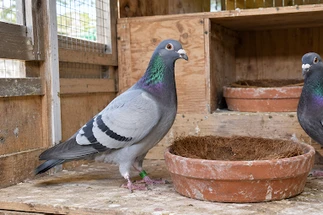
The nest bowl should be in place before the pair begins building. Pigeons may accept several bowl styles, but the size and material should suit the birds and the way you clean the breeding section.
Our pigeon nest bowls include clay, plastic, plastic-weave, Belgium, and paper-pulp options.
Clay bowls are heavier and stay put well. Plastic bowls are easy to wash and reuse. Paper-pulp bowls are lightweight and convenient when you want a simple disposable option between rounds.
For larger breeds, check the inside diameter rather than buying a bowl only because it is labeled for pigeons. A bowl that feels comfortable for a Racing Homer may be tight for a larger fancy breed.
Add a Nest Pad Where It Makes Sense
Nest pads give the pair a ready surface inside the bowl and can keep eggs from sitting directly against a hard base.
Felt and coconut-fiber pads are both used in breeding lofts. The right size should sit inside the bowl without folding heavily up the sides or leaving a large gap around the edge.
We carry several pigeon nest pads and breeding accessories for different bowl sizes and breeding setups.
Replace a pad when it becomes heavily soiled, damp, or damaged rather than continuing to use it through multiple rounds simply because it is still in one piece.
Check the Feed Before Pairing
Breeding pairs need a ration that matches the work of producing eggs and raising youngsters. Review what the birds are already eating before adding several new products to the program.
Our pigeon feed selection includes grain mixes and pellets used for different stages of loft management. Foy’s existing feeding guidance also discusses pellets and quality grain mixes during breeding season.
Make feed changes gradually rather than replacing the entire ration overnight. Once the pair is feeding youngsters, watch how quickly the feeder empties and adjust the amount so the parents have enough without leaving stale feed sitting in the box.
Keep feeders clean and positioned so the birds cannot easily foul the feed from above.
Keep Grit, Minerals, and Calcium Available
Breeding hens have higher calcium demands during egg production, so the mineral side of the diet deserves attention before pairing.
Foy’s pigeon grit and mineral range includes mixed mineral grit, red stone, crushed oyster shell, and high-calcium grit. Mixed grit can provide several components together, while oyster shell is used primarily as a calcium source.
Keep grit clean and dry in its own container rather than mixing large amounts directly into the regular feed.
For a deeper breakdown of the different grit types, our Best Grit for Pigeons guide explains red stone, oyster shell, flint, silex, and mixed mineral grit in more detail.
Review Breeding Supplements Before You Use Them
Breeding supplements are best chosen around the base diet rather than added automatically because breeding season is starting.
Our pigeon breeding and fertility supplements include vitamin and mineral blends, fertility products, breeder formulas, oils, and calcium products.
Check the ingredients before combining several products. A breeding powder, multivitamin, and calcium supplement can contain overlapping nutrients, so using all three together may add more than you intended.
Follow the directions for the specific product you choose. The schedule for one breeding supplement does not automatically apply to another.
Have Artificial Pigeon Eggs Ready
Artificial eggs are useful to keep in the breeding section even when you do not expect to use them immediately.
Fanciers use false eggs when they want a pair to continue sitting without hatching another round, or when real eggs need to be removed temporarily. They can also be useful when managing laying cycles or foster pairs.
We carry both wood and plastic pigeon eggs, so you can keep a few ready before breeding begins. Foy’s plastic eggs are made to resemble the size and weight of pigeon eggs and are designed for use in the nest.
Store them somewhere clean and easy to reach. Hunting for false eggs after a hen has already laid is unnecessary when they take almost no room to keep on hand.
Get Current-Year Bands Ready Before the Youngsters Hatch
Bands are easy to forget during breeding prep because they are not needed on pairing day. They become time-sensitive once the squabs hatch.
Permanent seamless bands are fitted while the youngster is still small enough for the foot to pass through the ring. Waiting until the youngsters are already several days old before ordering bands can leave very little room for delays.
Sort the correct sizes by breed and keep the current-year bands somewhere you can reach quickly. Racing Homers intended for competition may also require the correct racing organization band.
Our Pigeon Leg Band Size Guide covers NPA sizes by breed, AU racing bands, and the usual banding window for young pigeons.
Set Up Breeding Records Before the First Eggs
Breeding records are much easier to keep when the system is ready before several pairs begin laying at the same time.
Record the cock and hen, pairing date, egg dates, hatch dates, youngster band numbers, and any foster information you want to follow later. Separate records are particularly useful when several pairs are raising youngsters in the same section.
We carry pigeon breeding record cards and loft registers for pair, clutch, pedigree, and loft records.
Keep the record card close enough to the breeding box that information can be added while it is fresh instead of trying to reconstruct dates later.
Check Feeders and Drinkers in the Breeding Section
Breeding pairs should have reliable access to clean feed and water without leaving the nest area for long periods.
Check drinkers for leaks before pairing and clean them thoroughly. A slow leak inside a breeding section can leave the floor or nest area damp long before it becomes obvious from outside the box.
Feeders should keep the grain accessible while reducing the chance of the birds standing in it or fouling it. Our pigeon feeders include guarded, sanitary, wall-mounted, and other loft styles.
Choose the feeder around the size of the breeding space rather than placing a large loft feeder where it takes up room the pair needs around the nest.
Shop Pigeon Breeding Supplies Before Pairing
Breeding season is easier to manage when the equipment is already in place before the birds are paired.
We carry pigeon breeding supplies for nest setup, breeding boxes, artificial eggs, record keeping, feed, grit, minerals, bands, and other parts of the breeding loft. Current breeding products include paper-pulp nest bowls, felt nest pads, wood and plastic pigeon eggs, nest boxes, breeding units, and record cards.
Check what you already have, replace worn or missing equipment, and set up the breeding section before the pairs go together. Once eggs and youngsters arrive, the supplies you prepared beforehand are the ones you will be glad are already there.