
Posted by Foy's Pet Supplies on Oct 1st 2026
Best Grit for Pigeons: Types of Grit and How to Choose the Right One
Pigeon grit comes in several forms, and the ingredients can vary quite a bit from one bag to another. Some blends contain red stone, oyster shell and flint, while others are mainly calcium sources or a single type of mineral grit.
For most grain-fed pigeons, a mixed pigeon grit containing several components is a practical everyday choice. Breeding hens may need more attention to calcium, while plain granite or flint grit serves a different purpose from oyster shell or mineral-rich red stone.
The right choice depends on what your pigeons are eating, what the grit contains and what you want it to provide.
What Is the Best Grit for Pigeons?
For most lofts, the best pigeon grit is a clean, mixed grit made specifically for pigeons that contains hard grit along with mineral and calcium sources such as red stone and oyster shell.
A mixed grit gives pigeons access to different particles rather than relying on one ingredient alone. For example, our Natural Hi-Calcium Grit combines silex, red stone and oyster shell. The silex provides hard grit, while the red stone and shell supply minerals and calcium.
Pigeons fed whole grains swallow the grain rather than chewing it. Merck Veterinary Manual notes that pigeons and doves use small stones or grit in the digestive tract to help grind whole seeds.
That does not mean every product labeled “grit” provides the same thing. Plain granite, oyster shell and a complete mineral grit have different compositions, which is why checking the ingredient list matters.
What Does Grit Do for Pigeons?
Pigeon grit can serve two different purposes: helping with the physical breakdown of whole grains and supplying minerals such as calcium.
Hard, insoluble particles such as flint, silex or granite remain in the gizzard long enough to take part in grinding food. Pigeons commonly swallow seeds and grains whole, so these particles can assist with the mechanical part of digestion. Merck specifically identifies pigeons and doves among birds that use grit when consuming whole seeds.
Soluble materials such as oyster shell work differently. They gradually break down and provide calcium rather than acting simply as grinding stones.
Red stone adds another mineral source. Natural Red Stone, for example, is made from fired clay and supplies minerals and trace elements.
This difference is worth knowing because a bag of plain hard grit is not automatically a replacement for a mineral-rich pigeon grit.
Types of Grit for Pigeons
Mixed Mineral Grit
A mixed mineral grit is the most straightforward choice for fanciers who want several types of grit in one container.
These blends may combine flint or silex, red stone, oyster shell and other mineral ingredients. The hard particles and mineral sources are available together, so you do not have to build a mixture from several separate products.
Our pigeon grit selection includes mixed mineral grits as well as individual components for fanciers who prefer to make their own combination.
Check the label before buying. Two bags both called “pigeon grit” can contain very different ingredients.
Oyster Shell Grit
Crushed oyster shell is primarily a calcium source, making it particularly useful in breeding lofts when hens are producing eggs. Veterinary nutrition guidance also recognizes calcium supplementation as an important consideration during egg laying.
Our Crushed Oyster Shell can be offered separately or added to a grit mixture that does not already contain enough shell.
Oyster shell should not be confused with hard insoluble grit. It gradually dissolves, so its main value is the calcium it supplies.
Red Stone Grit
Red stone is common in European-style pigeon grit mixtures and can also be offered as a separate mineral product.
It is made from fired clay and provides minerals and trace elements. Our Natural Red Stone Grit is fired at high temperature before being ground into particles suitable for pigeons.
Red stone is often included alongside oyster shell and hard grit rather than used as the only grit source.
Flint, Silex and Granite Grit
Flint, silex and granite are hard, insoluble grit materials. Their main purpose is different from calcium-rich oyster shell.
They provide durable particles that can remain in the gizzard and take part in grinding whole grain.
Plain granite poultry grit can provide this hard material, but it does not automatically provide the range of minerals found in a pigeon grit blend. Foy’s longtime loft-management guidance specifically cautions against relying on granite grit alone when pigeons also need a source of trace minerals.
Pigeon Grit With Anise
Some pigeon grit blends include anise, but the base ingredients still matter most when comparing products. Natural Hi-Calcium Grit with Anise, for example, contains red stone, marine shell, oyster grit and flint, with anise added to the blend.
When comparing anise grit with a standard blend, look at the mineral composition first.
How to Choose the Right Grit for Your Pigeons
Start with the pigeons' regular diet. For pigeons eating a traditional grain mix, check that the grit contains durable grinding particles along with the mineral sources you want available in the loft.
Our pigeon feed selection includes grain mixes and pellets, and the type of diet matters when deciding what additional minerals or grit to offer.
Breeding birds deserve closer attention to calcium. A blend containing oyster shell can provide a calcium source, or oyster shell can be offered separately when the existing grit does not contain it.
For racing pigeons, compare the ingredients rather than choosing a grit simply because it is labeled for racing. Look at the hard grit, calcium and mineral sources included in the blend. American Racing Pigeon Union beginner feeding material recommends that pigeons have access to fresh grit and clean water, including during breeding and other stages of loft management.
Young pigeons eating grain on their own can also be given access to suitable pigeon grit. Make sure the particle sizes are appropriate enough for the pigeons to pick up rather than leaving them with a mixture dominated by pieces they cannot use.
Do Pigeons Need Grit if They Eat Pellets?
Pigeons eating a complete pellet diet may not need insoluble grit for digestion in the same way grain-fed pigeons do. Pellets are already processed, while pigeons eating whole grains and seeds use the gizzard to grind food, which is where hard grit such as flint or granite can play a role.
Veterinary guidance is not completely uniform on grit for captive pigeons. VCA notes that pigeons can do well without traditional insoluble grit in some feeding situations and also cautions against allowing excessive grit consumption. Digestible sources such as oyster shell serve a different purpose because they provide calcium rather than simply helping with grinding.
For pigeons fed mainly on pellets, check the feed label before adding extra grit, minerals or calcium. A complete pellet may already provide the nutrients the bird needs, while pigeons on a grain-based diet are more likely to benefit from access to suitable pigeon grit.
Is Chicken Grit the Same as Pigeon Grit?
Chicken grit and pigeon grit are not always the same. Plain poultry grit is often made from granite or another hard, insoluble material, while pigeon grit may also contain oyster shell, red stone and other mineral ingredients.
Hard poultry grit can provide grinding material, but it does not automatically supply the calcium and minerals found in a mixed pigeon grit. The ingredient list matters more than the product name.
Particle size also needs to suit the bird. Some grit made for larger poultry can be too coarse for certain pigeon breeds, especially smaller varieties.
When buying grit for pigeons, check both the ingredients and particle size. For everyday loft use, a pigeon-specific blend is usually the better choice when you want hard grit together with mineral and calcium sources.
Can Oyster Shell Replace Pigeon Grit?
No. Oyster shell can provide calcium, but it does not replace a complete pigeon grit. Mixed pigeon grit may contain oyster shell along with red stone and hard particles such as silex or flint, so it provides a broader mix of materials.
Oyster shell is mainly used as a calcium source, which can be especially useful for breeding hens during egg production. Hard grit such as flint or silex serves a different role by providing durable particles for grinding whole grains.
Oyster shell is best used as a calcium source rather than as the only grit offered to grain-fed pigeons. It can be offered separately when additional calcium is needed.
How Much Grit Should Pigeons Get?
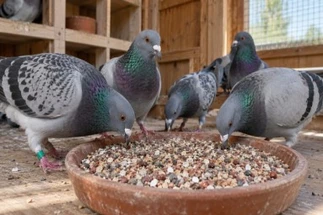
Pigeons do not need a fixed measured amount of grit each day. For grain-fed pigeons, the usual approach is to keep fresh grit available in a separate clean container so they can take what they need. American Racing Pigeon Union beginner guidance recommends that pigeons have access to fresh grit at all times.
Use a small grit cup or feeder and add enough for the number of pigeons in the loft without leaving a large amount sitting for weeks. Replace grit that becomes wet, dirty or contaminated with droppings, and clean the container before refilling it.
Grit consumption can change during the year. Our earlier loft-management guidance notes that pigeons often consume more grit during breeding season, when hens are producing eggs and the demands on breeding pairs are higher.
Pigeons eating a complete pelleted diet may not need grit managed in exactly the same way as grain-fed pigeons, so check the feed directions before adding large amounts of extra minerals or calcium.
Shop Pigeon Grit and Minerals
The right grit depends on what you are already feeding and the minerals your pigeons need. A mixed grit is a convenient choice for everyday loft use, while red stone and crushed oyster shell give you the option to add specific components separately.
We carry pigeon grit in several formulas and package sizes, including Natural Hi-Calcium Grit, Red Stone Grit, crushed oyster shell and mineral grit blends for racing, breeding and everyday loft use.
Check the ingredients before ordering so you know exactly what the grit provides rather than choosing by bag size or product name alone.