
Posted by Foy's Pet Supplies on Sep 20th 2026
How to Clean a Pigeon Loft: Daily, Weekly and Deep Cleaning
A pigeon loft can collect droppings under perches, dust around nest boxes, spilled feed along the edges and damp patches around drinkers. Regular cleaning keeps these areas under control and makes it easier to notice changes in droppings, moisture or feed buildup.
Most lofts need some attention every day, a more thorough cleaning during the week and an occasional deep clean of surfaces, equipment and hard-to-reach areas. The exact schedule depends on the number of pigeons, the floor setup, breeding activity, weather and how quickly droppings accumulate.
Below is a practical pigeon loft cleaning routine that you can adjust to the way your own loft is set up.
How Often Should You Clean a Pigeon Loft?
A pigeon loft should be cleaned every day at least at the level of removing fresh droppings, wet material, spilled feed and dirty water. For lofts with scraped floors, the American Racing Pigeon Union recommends regular, preferably daily, scraping and keeping the loft dry.
Perches, shelves and the floor below areas where pigeons spend the most time usually collect droppings first, so these spots may need attention every day. Feed that has fallen onto the floor should also be removed rather than left where it can become damp or contaminated.
Drinkers also need daily attention. Check for dirty water, residue and spills around the base so the drinking area stays clean and dry.
A larger clean of the entire loft will depend on the setup. A scraped solid floor, floor grates and a properly managed litter system do not require exactly the same routine. The number of pigeons, breeding activity and moisture in the loft also affect how quickly waste builds up. Whatever flooring system you use, droppings and damp material should not be allowed to accumulate between cleanings.
Daily Pigeon Loft Cleaning Checklist
Daily pigeon loft cleaning should focus on fresh droppings, dirty water, spilled feed and damp areas. These are the parts of the loft that change fastest and need the most regular attention.
Use this daily checklist:
- Scrape fresh droppings from perches, shelves and the floor below the areas where pigeons spend the most time.
- Remove spilled or leftover feed before it becomes damp, dirty or mixed with droppings.
- Empty and refresh the drinking water and clean any visible residue from the drinker.
- Dry wet areas around drinkers so moisture does not sit on the floor.
- Check nest boxes and remove heavily soiled material when it can be done without disturbing eggs or young squabs.
- Look under perches, along wall edges and in corners where droppings and feed can collect out of sight.
- Check for damp bedding, unusual droppings, insects or stronger-than-normal odor, since these can point to a problem that needs more attention.
Drinkers should be checked every day because water can become contaminated quickly with feed, dust and droppings. Our pigeon drinker guide covers cleaning and maintaining drinkers in more detail.
Daily cleaning does not mean washing down the entire loft every day. The focus is on removing fresh waste and moisture before either has a chance to build up.
What Should You Clean Each Week in a Pigeon Loft?
Each week, clean the full loft floor, perches, ledges, nest-box fronts, corners and other surfaces where droppings and debris collect. Daily spot cleaning handles the busiest areas, while the weekly clean covers parts of the loft that may not need attention every day.
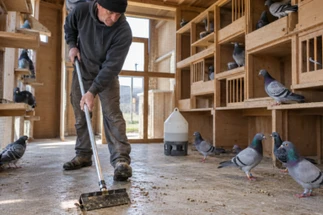
Scrape the entire floor, including beneath shelves, along walls and around nest boxes. Remove dried droppings from perch surfaces and ledges, and clear feed, feathers and debris from corners and other tight spaces.
Different areas may need different tools. A long-handle scraper is useful for open floor space, while a smaller flat or triangle scraper gives you better control around corners, nest boxes and narrow areas.
While cleaning, check for damp wood, leaking drinkers, damaged perches, loose floor material and feed trapped in places pigeons cannot reach. These problems are easier to deal with before moisture or debris starts building up around them.
Floor covering should also be maintained according to the product directions. Natural’s Granulated Floor Covering, for example, can be raked to remove droppings and keep the surface in usable condition between full replacements.
How to Deep Clean a Pigeon Loft
To deep clean a pigeon loft, remove portable equipment, scrape away droppings and old floor material, clean the surfaces, apply disinfectant where needed, then let the loft dry completely before putting everything back.
Start by removing feeders, drinkers and any other equipment that can be taken out of the loft. Replace floor covering that is due for a change, then scrape dried droppings from the floor, shelves, perches, nest boxes and corners.
Work from the highest surfaces down toward the floor so dust and debris are removed in one direction instead of falling onto areas you have already cleaned.
Once the loose material and droppings are gone, wash surfaces that are suitable for wet cleaning. Cleaning should come before disinfecting, because dirt and organic material can reduce a disinfectant’s ability to reach the surface properly.
Apply disinfectant according to the product label, including the correct dilution and contact time. The surface may need to remain wet for a set amount of time for the disinfectant to work as intended. Never mix cleaning or disinfecting products unless the labels specifically say they can be used together.
We carry pigeon loft disinfectants and floor-care products for different cleaning needs.
Let the loft and equipment dry fully before the pigeons return. Drying is an important part of the cleaning process, especially after washing floors, shelves or nest-box surfaces.
Avoid Dry Sweeping Heavy Pigeon Droppings
Dry sweeping can send dust and particles from old droppings into the air. For heavier buildup, avoid aggressively sweeping dry material and try to keep dust to a minimum while cleaning.
CDC guidance recommends controlling dust when cleaning areas with bird droppings and using appropriate respiratory protection for larger or heavily contaminated accumulations.
Regular scraping helps prevent droppings from reaching that stage. For routine loft cleaning, wear suitable protective gear, wash your hands afterward and avoid carrying dusty clothing into living areas.
How to Clean Pigeon Feeders and Drinkers
Pigeon feeders should be kept free of old feed, husks and droppings, while drinking water should be changed every day and the drinker cleaned whenever residue or debris is visible.
Empty stale feed before adding a fresh portion. Remove husks, droppings and feed residue from the feeder, and let washed feeders dry before filling them again. Leftover feed should not be allowed to sit long enough to become damp or spoil. Our general pigeon health tips also recommend adjusting feeding amounts so pigeons finish their feed rather than leaving excess behind.
Change drinking water daily, especially when medications, vitamins or probiotics have been added. Rinse away visible feed, dust and droppings from the drinker rather than simply topping up old water. Our existing pigeon health guidance specifically recommends fresh water every day.
Check the floor around the drinker at the same time. Splashing or a slow leak can leave a damp patch that needs to be dried even when the rest of the loft floor is clean.
Our pigeon drinkers come in different capacities and styles, so the setup can be matched to the number of pigeons and the layout of the loft.
How to Clean Pigeon Nest Boxes During Breeding Season
During breeding season, clean pigeon nest boxes by removing loose droppings, wet material and heavily soiled nesting material without disturbing eggs or young squabs more than necessary.
Clean the front of the nest box, nearby shelves and the floor beneath it as part of the regular loft routine. These areas often collect droppings and debris even when the nest itself does not need to be touched.
The area around young squabs may need more frequent attention as they grow and produce more droppings. Remove wet or heavily soiled material carefully, then keep the nest area dry.
Avoid unnecessary handling of eggs, squabs or the nest while cleaning. The focus should be on keeping the surrounding area clean and dry without repeatedly disrupting the breeding pair.
Should You Use Floor Covering in a Pigeon Loft?
Pigeon loft floor covering is optional. Some fanciers use a bare floor that is scraped regularly, while others use floor grates, granulated floor covering or loft white to help manage droppings and moisture.
A bare solid floor makes droppings easy to see and remove. Floor grates keep pigeons above much of the waste below. Granulated floor covering can absorb moisture and help droppings dry faster, but it still needs regular raking and maintenance.
We carry pigeon floor-covering products, including Natural’s Granulated Floor Covering and Belgium White.
Natural’s Granulated Floor Covering is designed to absorb moisture and can remain in the loft for an extended period when it is maintained properly. The product directions recommend raking it weekly rather than replacing the entire layer during every cleaning.
Belgium White is an absorbent loft powder applied after the floor has been scraped and cleaned. It can be brushed across the floor and into cracks and corners to help keep these areas dry.
Floor covering should be added to a clean surface rather than used to cover heavily soiled areas.
How to Keep a Pigeon Loft Dry After Cleaning
A pigeon loft should be fully dry after cleaning, with no standing water, damp floor covering or wet areas around drinkers. Moisture left in the loft can keep floors, bedding and wooden surfaces damp long after the cleaning is finished.
Check common sources of moisture such as leaking or splashing drinkers, rain entering the loft, damp floor covering and poor drainage. Fixing the source is more effective than repeatedly drying the same area.
Ventilation should allow moisture and stale air to leave the loft without directing a strong draft across the pigeons.
Areas that regularly become damp should be included in your daily loft check so leaks or wet spots can be dealt with before moisture builds up.
Shop Pigeon Loft Cleaning Supplies
Keeping a pigeon loft clean is easier with tools made for the job. We carry pigeon loft cleaning supplies for scraping floors, cleaning corners, managing moisture and keeping heavily used loft areas easier to maintain.
Shop long-handle floor scrapers, flat and triangle scrapers, floor-care products, disinfectants and other loft-cleaning essentials for routine maintenance and deeper cleanups.
Choose the supplies that fit your loft setup and keep them ready so droppings, damp areas and debris can be dealt with before they build up.